Marketing Strategy Blog

The Most Important B2B SEO Trends for 2026

SEO Trends
Table of Contents

Let’s take a moment to stare into the search engine optimization (SEO) crystal ball.

What does 2026 hold for B2B SEO? What trends should you expect? How can you prepare to capitalize on them?

The answer in 2026 is more complex—and more urgent—than ever before. Google’s AI Overviews are now appearing on roughly 13% of all queries, up from 6.5% in January 2025. Zero-click searches have surpassed 60% of all searches. And a brand-new discipline has emerged alongside traditional SEO: Generative Engine Optimization (GEO)—the practice of optimizing your content to be cited and referenced by AI-powered search results inside platforms like ChatGPT, Perplexity, Google Gemini, and Microsoft Copilot.

For B2B companies—especially in SaaS and tech—the digital landscape has never been more dynamic or more demanding. Your buyers are conducting research across more channels than ever, using AI-powered tools to shortlist vendors before your sales team even enters the conversation. Long sales cycles, multiple decision-makers, and complex buyer personas make B2B SEO strategy inherently more nuanced than B2C—and the AI era has added another layer of complexity.

In this guide, we look at the most important B2B SEO trends you need to be aware of in 2026.


Key Takeaways

  • GEO is now essential alongside SEO. Optimizing for AI platforms like ChatGPT, Perplexity, and Gemini is no longer optional — and traditional SEO rankings don’t guarantee visibility there, since fewer than 10% of AI-cited sources rank in Google’s top 10.
  • AI Overviews are reshaping the SERP. Appearing in ~13% of queries and dropping organic CTR by 61%, Google’s AI Overviews make getting cited inside the overview — not just ranking below it — the new priority.
  • Zero-click searches have crossed 60%. The goal is shifting from driving clicks to earning citations, impressions, and brand recognition across the full search ecosystem.
  • Original, human expertise is your competitive moat. AI-generated content has created a “sea of sameness.” Proprietary research, firsthand experience, bold POVs, and real customer data are what both Google and AI engines prefer to cite.
  • Topical authority beats isolated keyword targeting. Deep content clusters covering an entire subject comprehensively outperform scattered blog posts — for both traditional rankings and AI citation selection.
  • MOFU and BOFU content is more resilient than TOFU. AI struggles to replace comparison pages, case studies, pricing content, and outcome-specific guides — exactly the content that drives B2B conversions.

1. GEO: Generative Engine Optimization Is Now Non-Negotiable for B2B

In 2024, the conversation was about Google’s Search Generative Experience. In 2026, the conversation has fundamentally shifted. B2B buyers aren’t just using search engines anymore. They’re asking ChatGPT, Perplexity, Google Gemini, and Microsoft Copilot. GEO—Generative Engine Optimization—is the discipline of ensuring your brand is cited, mentioned, and recommended inside those AI-generated answers.

Here’s the critical stat for any B2B SEO strategy: fewer than 10% of the sources cited in ChatGPT, Google Gemini, and Copilot rank in the top 10 Google organic results for the same query (eMarketer, 2025). In other words, your traditional SEO performance does not guarantee GEO visibility. They require parallel, complementary strategies.

That said, don’t abandon Google SEO for GEO. Stratabeat’s analysis of 300 B2B SaaS websites found that Google’s search volume is still 373x larger than ChatGPT’s. Google’s own search volume grew 22% in 2024—meaning that growth alone was the equivalent of adding multiple ChatGPTs. The smart play for B2B companies is to optimize for both, building a unified authority architecture that feeds both traditional rankings and AI citations. This dual approach is at the heart of AI-driven SEO strategies in 2026.

GEO vs. SEO: Understanding the Key Difference

SEO is optimizing content to rank in search engine results pages (SERPs). GEO is optimizing content to be cited and recommended inside AI-generated answers from Large Language Models.

They are complementary, not competing. The strongest B2B brands in 2026 invest in both.

So what does GEO actually require for B2B SaaS and tech companies? Here’s a practical breakdown of the key GEO factors:

GEO Factor What It Means for B2B Priority
Topical authority Deep, consistent coverage of your category—AI favors recognized topic authorities Critical
Structured content Clear headings, FAQ sections, concise definitions that AI can extract and cite easily Critical
Brand mentions & citations Third-party sites, press, and partners referencing your brand across the web High
Original data & research Proprietary insights LLMs cite because they can’t be replicated elsewhere High
E-E-A-T signals Author bios, credentials, experience cues that establish trust for AI systems and Google alike High
Semantic markup & entity linking Schema.org markup, structured data, and entity relationships that help AI systems understand your content Medium
Social & community reinforcement LinkedIn, Reddit, and Quora presence that LLMs crawl for real-time authority signals Medium

One technical note worth addressing: you may have heard about llms.txt, a new file standard designed to guide AI crawlers through your site (analogous to robots.txt). Current evidence suggests its impact on AI citation frequency is minimal—major LLM providers have not adopted it as a ranking signal. It is a low-cost, low-risk addition for developer-heavy B2B sites, but it should not displace foundational GEO and technical SEO work.

Stratabeat Case Study: GEO-Driven Traffic Growth

One Stratabeat client grew traffic from AI answer engines by 478.3% after implementing a GEO-focused content and authority-building program. The strategy combined original research, structured content hubs, and systematic brand mention building—the same signals that Large Language Models use to identify authoritative sources for citation.

The takeaway: GEO visibility isn’t a separate project. It’s the output of doing SEO and content marketing at a high level, consistently over time.

2. Google’s AI Overviews Have Reshaped the B2B SERP

The Google SERP you knew in 2024 is gone. Google’s AI Overviews—powered by Google Gemini—now appear on approximately 13% of all U.S. desktop queries, double the rate from January 2025. When they appear, organic click-through rates drop by an average of 61%. For B2B companies relying on informational search visibility to fill the top of their pipeline, this is a material business risk.

According to third-party analysis, 88% of queries triggering AI Overviews are informational in nature. Terms like “marketing strategy,” “sales techniques,” and “project management tips”—the bread and butter of B2B content creation—are the most exposed. AI adoption across the search engine market is accelerating faster than most B2B marketing teams anticipated.

The brands that are winning are those doubling down on niche authority, proprietary data, and content that AI simply can’t replicate. Brands cited in AI Overviews earn 35% more organic clicks and 91% more paid clicks than those not cited. Being inside the AI Overview—not just beneath it—is the new position zero and a critical goal for any modern B2B SEO strategy.
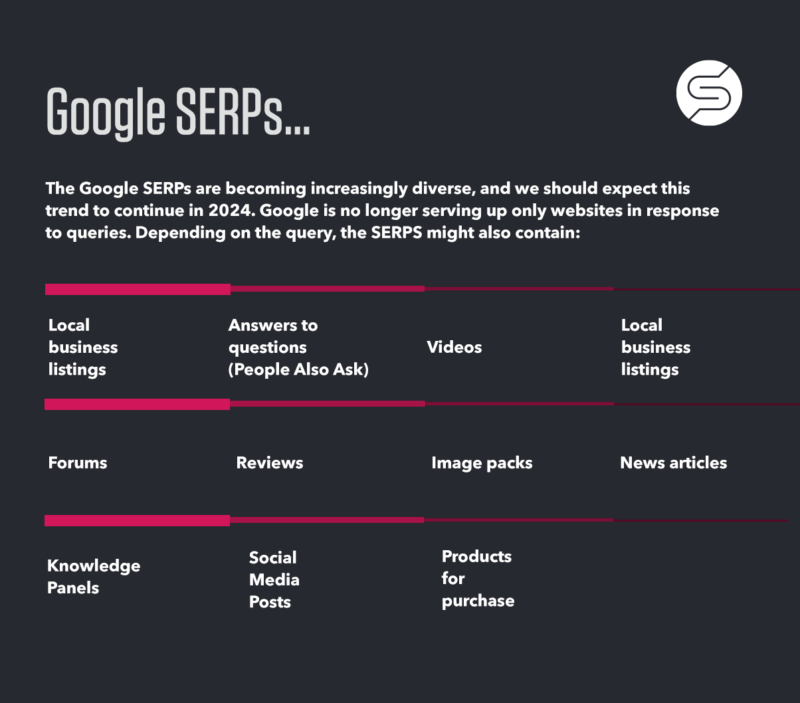
The modern Google SERP with AI Overviews

The modern Google SERP: AI Overviews now sit above all organic results, reshaping B2B search visibility.

SERP Feature B2B Opportunity Risk if Ignored
AI Overview (AIO) Get cited as a source—earns 35% more organic CTR and builds brand trust with your buyer persona Invisible to 13%+ of high-intent queries
People Also Ask (PAA) Own adjacent questions in your category and capture related intent clusters Competitors occupy the full intent landscape
Featured Snippets / Rich Snippets Position-zero visibility; 42.9% CTR vs. 39.8% for the #1 organic result Zero-click traffic captured by others
Google AI Mode Conversational follow-up queries keep buyers in Google ecosystem BOFU intent lost inside a chat interface
Knowledge Panel Brand entity recognition, authority signals, trust at a glance Inaccurate third-party info fills the void
Video Carousel Thought leadership through video content; AI has weaker grip on video search results Missed visual and multimedia search real estate
Passage Rankings Individual sections of long-form content can rank independently for specific queries Deep, valuable content goes unrecognized by search engine algorithms

3. Zero-Click Searches Are the New Normal—Here’s How B2B Brands Adapt

Zero-click searches—queries that end without a user visiting any website—are no longer a fringe trend. According to Semrush’s 2025 click-stream analysis, 58.5% of U.S. searches and 59.7% of EU searches now conclude entirely within the search engine’s results page. That number grew 13 percentage points in the single year following the AI Overview rollout.

For B2B companies, the implications are significant. Yet organic search still drives 44.6% of all B2B revenue—more than twice any other digital channel. And AI-referred traffic, while smaller in volume, converts at dramatically higher rates: AI-referred visitors convert at nearly 23x the rate of standard organic traffic in some analyses. The strategic imperative is to shift from chasing organic visitors to earning citations and impressions across the full SERP ecosystem.

Here’s how B2B SaaS and tech companies are adapting their B2B SEO strategy:

  • Win featured snippets and rich snippets. While they create zero-click results, they build brand recognition and increase the probability of earning AI Overview citations.
  • Dominate PAA slots. Research the top questions your ideal customer profile (ICP) is asking around target keywords. Build dedicated FAQ content that directly and concisely answers those questions using natural language.
  • Own your brand Knowledge Panel. Ensure your brand is a recognized entity in Google’s knowledge graph through consistent structured data, semantic markup, and brand mention building.
  • Optimize Title Tags and Meta Descriptions as demand gen assets. Treat every SERP listing like a digital ad. Compelling, buyer-persona-specific messaging earns the click when AI summaries fail to satisfy intent.
  • Invest in LinkedIn and community presence. B2B buyers conducting deep research frequently end up on LinkedIn, Reddit, and industry forums—channels that AI Overviews regularly surface as source citations.

4. The Sea of Sameness Gets Deeper—Original Expertise Is Your Moat

If the rise of ChatGPT created a content uniformity problem in 2024, it’s a full-blown crisis in 2026. AI-powered content creation tools are so accessible that any company with a marketing budget can publish dozens of blog posts per month. The problem isn’t volume. It’s that AI-generated content draws from the same training data, producing the same insights, the same structure, the same voice. This creates a sea of sameness when it comes to content. The more AI-generated content that floods the internet, the more deeply this problem is exacerbated.

For B2B SaaS and tech companies, this creates a rare and underexploited competitive advantage: content that cannot be replicated. This means human expertise, proprietary data, firsthand customer experience, and bold perspective—the things that Large Language Models are explicitly bad at generating because they don’t exist anywhere in training data yet.

As a result, standing out with uniqueness is becoming increasingly important for brands.

High-value content types that consistently outperform AI-generated content in B2B markets:

  • Original research studies with real survey data from your ICP
  • Executive briefings and opinion pieces with bylined points of view on industry direction
  • Quotes from practitioners and customers—not just analysts or generic expert commentary. For example, check out this post about B2B growth strategies with contributions from a variety of experts.
  • Case studies with specific, verifiable customer lifetime value and revenue outcomes
  • Interactive content: calculators, assessment tools, and self-serve channels that competitors can’t copy with a prompt
  • Long-form content that reflects years of client work—not generic best practices reassembled by AI

For one client in the healthcare industry, Stratabeat, a B2B SEO agency, conducted a survey, collected 3,500+ responses, and then, based on the results, created a report, five blog posts, two SlideShares, several byline articles published in industry websites, and an infographic. The blog posts were the highest-performing posts in terms of organic traffic that year. The campaign was so successful that the CEO wound up appearing on national TV five times as a result of the campaign.

► Stratabeat Case Study: Original Research Drives Outsized Results

For a healthcare industry client, Stratabeat conducted a comprehensive survey, collecting 3,500+ responses from the target audience. The team transformed that data into a report, five blog posts, two SlideShares, multiple byline articles in industry publications, and an infographic. The blog posts became the highest-performing content in organic traffic that year—and the original research earned the client’s CEO five national television appearances.

Original data earns media. Media earns citations. Citations earn GEO visibility—and brand authority that no AI-powered content creation tool can manufacture.

By investing in these types of content, brands can continue to gain search visibility and drive organic traffic through both SEO and GEO while avoiding direct competition with commoditized AI-generated content.

5. E-E-A-T Is the Foundation for Both Google Rankings and GEO Citations

Google added “Experience” to its E-E-A-T guidelines in 2022. In 2026, those four pillars—Experience, Expertise, Authoritativeness, and Trustworthiness—are foundational to both traditional on-page SEO performance and GEO citation. When AI systems synthesize answers, they preferentially select content from sources with strong E-E-A-T signals. Content based on firsthand knowledge consistently outperforms generic overviews in both traditional rankings and AI-generated responses.

As they note in their E-E-A-T guidelines:

Consider the extent to which the content creator has the necessary first-hand or life experience for the topic. Many types of pages are trustworthy and achieve their purpose well when created by people with a wealth of personal experience.

Google understands that those with firsthand knowledge often have the best understanding of a subject, and their knowledge should be recognized in the search rankings.

For B2B companies, here’s how to build E-E-A-T into your content creation process:

  • Author bios with credentials, years of experience, LinkedIn profiles, and certifications on every piece of content
  • Case studies and client outcome stories that demonstrate real-world application of expertise
  • Original data from proprietary research, client engagements, or industry surveys
  • Bylined articles in recognized industry publications to build offsite authority
  • Awards, analyst recognition (Gartner, Forrester, G2), and third-party analysis prominently displayed
  • LinkedIn thought leadership where LLMs actively crawl for brand and author authority signals

AI systems are sophisticated enough to recognize shallow expertise. A blog post that aggregates publicly available best practices carries far less weight—for both search engine algorithms and AI answer engines—than one written by a practitioner with 15 years of hands-on experience. This is why the best-performing B2B SEO programs in 2026 treat E-E-A-T as a content strategy discipline, not a technical SEO checkbox. And the greater your E-E-A-T, the greater your SEO ROI.

6. Algorithm Volatility Is the New Baseline

Google’s core update cadence has accelerated dramatically. What used to be one or two major updates per year is now a near-continuous stream of changes to search engine algorithms. Following the six major updates across August–November 2023, the pace continued through 2024 and 2025—with the March 2025 core update doubling the number of queries triggering AI Overviews virtually overnight.

The B2B brands that weathered these updates share a common thread: they weren’t optimizing for algorithms—they were obsessively focused on search intent and content quality. Google’s goal hasn’t changed. It wants to connect searchers with the best possible answer. If your content is the best possible answer for your buyer persona, algorithm updates protect you rather than harm you.

Stratabeat’s analysis of 300 B2B SaaS websites found that top SEO performers—the top 10%—achieved 6.9x greater organic traffic growth year-over-year compared to the broader group. That gap is widening as AI-generated content floods the web and algorithm updates tighten quality thresholds. In B2B markets, where sales cycles are long and trust is earned slowly, this compounding advantage is significant.

► Stratabeat Case Study: Algorithm-Proof B2B SEO Growth

Stratabeat increased monthly organic traffic by 7,235.7% and grew monthly organic traffic value by $682,088 for one B2B client—helping the company add 252 employees within three years. The strategy was not built around any single algorithm update; it was built around deep topical authority, ICP-aligned content creation, and a relentless focus on search intent. Revenue grew by $41 million as a result.

This is the kind of compounding growth that keyword research alone and tactical SEO can’t deliver. It requires strategy.

7. Topical Authority and Content Clusters Are Your Competitive Moat

If there is one concept that unifies both traditional B2B SEO and GEO in 2026, it is topic authority. Google’s algorithms and AI answer engines both reward brands that demonstrate deep, consistent, comprehensive coverage of a subject area. A brand that publishes ten surface-level posts about a topic is invisible compared to one that has built a complete content hub around it.

For B2B SaaS and tech companies, think beyond keyword research. Think about the entire topical universe your buyers inhabit—every question they ask, every comparison they make, every job-to-be-done they have—and build content that covers that universe exhaustively.

Pillar Pages and Content Clusters: The Architecture of Topic Authority

The most effective B2B SEO architecture in 2026 is the topic cluster model:

  • A pillar page covers a broad topic comprehensively from multiple angles, with strong internal linking to all cluster pages
  • Cluster pages go deep on specific subtopics, long-tail keywords, and use cases, each linking back to the pillar
  • This content cluster architecture signals to Google and AI systems that you are not a generalist—you are the authority
  • The semantic relationships between pillar pages and cluster pages reinforce entity linking, a key signal for both Google’s knowledge graph and LLM citation selection
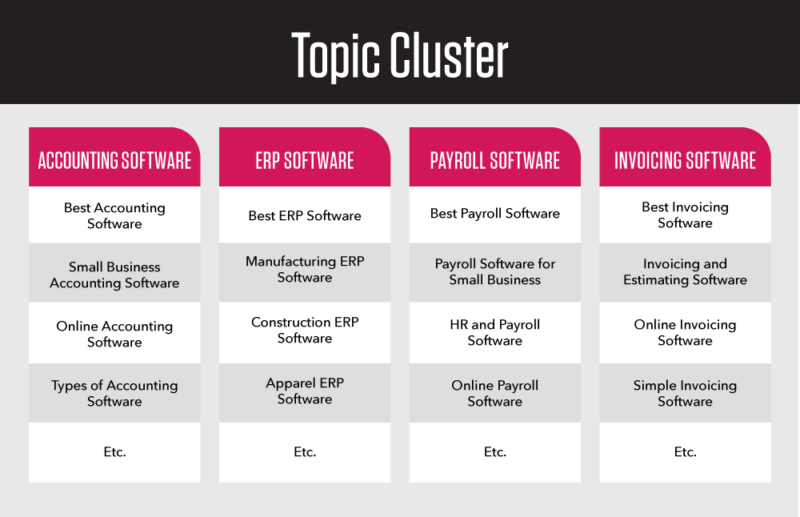
Topic Cluster

B2B brands that have built out full content hubs—not just a handful of blog posts—are consistently winning both traditional rankings and AI citations. GEO rewards breadth and depth in equal measure: an AI system is far more likely to cite a brand it has encountered across dozens of relevant, expert-level pages than one with a single authoritative post.

Publishing frequency also compounds results. Stratabeat’s benchmark research found that increasing content publishing frequency produces up to 47.9% improvement in top-10 Google rankings and 103.3% improvement in organic traffic. For B2B companies with long-form content as a core pillar of their SEO program, this is a material and measurable lever.

8. AI Answer Engines Are Reshaping the B2B Buyer Journey

Here’s the nuance that many B2B marketing teams miss: while AI Overviews and ChatGPT are displacing top-of-funnel informational traffic, MOFU and BOFU content is proving far more resilient. AI answer engines consistently struggle to replicate content that reflects deep buyer-specific context: comparison pages, pricing considerations, integration guides, customer outcome data, and competitive positioning specific to your product.
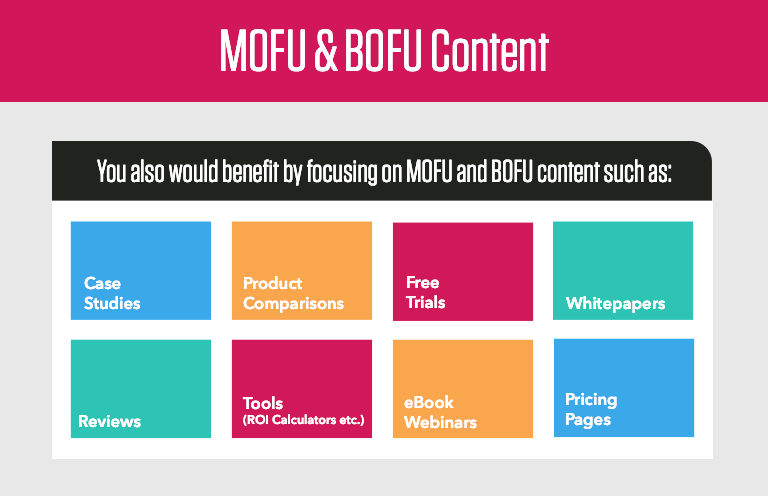
MOFU & BOFU Content

Bottom-funnel content such as case studies, pricing pages, and product comparison guides earns the highest AI-referred traffic, while generic “what is” and “how-to” guides have seen the steepest organic traffic declines. For B2B companies with complex products and long sales cycles, this is actually good news: your most conversion-relevant content is precisely the content AI can’t replace.

Funnel Stage AI Vulnerability B2B SEO Strategy
TOFU (Informational) High—AI Overviews satisfy most informational queries; this is where AI adoption impacts B2B traffic most significantly Invest in original research, unique POVs, interactive tools, and programmatic SEO for high-volume informational clusters
MOFU (Consideration) Medium—AI can summarize comparisons but lacks depth on specific use cases and buyer personas Build detailed comparison guides, ROI calculators, integration documentation, and content addressing specific buyer behaviors
BOFU (Decision) Low—AI defers to firsthand customer evidence and defers on pricing and product specifics Double down on case studies, testimonials, pricing content, demo CTAs, and content addressing long sales cycles and multiple decision-makers

9. Helpful Content Still Reigns—But Search Intent Has More Layers

Google’s Helpful Content System has evolved significantly since its 2023 launch. The bar has risen. Truly helpful content in 2026 doesn’t just answer the stated question. It anticipates follow-up questions, provides actionable next steps, and delivers insights the reader can’t find anywhere else. Surface-level content marketing is now a liability, not an asset.

For B2B content strategy, search intent analysis now needs to be multi-layered:

  • What is the person explicitly searching for? (stated intent)
  • What do they actually need to accomplish their underlying business goal? (implicit intent)
  • What will make them bookmark, share, or return to this page? (experience intent)
  • What would make them cite this page in an AI answer, a LinkedIn post, or a proposal to their VP? (authority intent)

The most effective B2B content research strategy remains direct conversation: customer interviews and close collaboration with your sales team. No keyword research tool captures the language, frustrations, and mental models of your ICP as accurately as a 30-minute customer interview. Combine those insights with thorough SERP analysis, People Also Ask research, and tools like SparkToro to build content that speaks directly to real buyer pain.

Conduct a thorough Google SERP analysis for every target keyword. Is the search engine results page filled with listicles, solution pages, or long-form guides? Does the content speak to executives or specialists? Use Google Analytics to understand which content formats and topics drive not just traffic but marketing qualified leads (MQLs) and pipeline. These are the signals that matter for B2B companies.
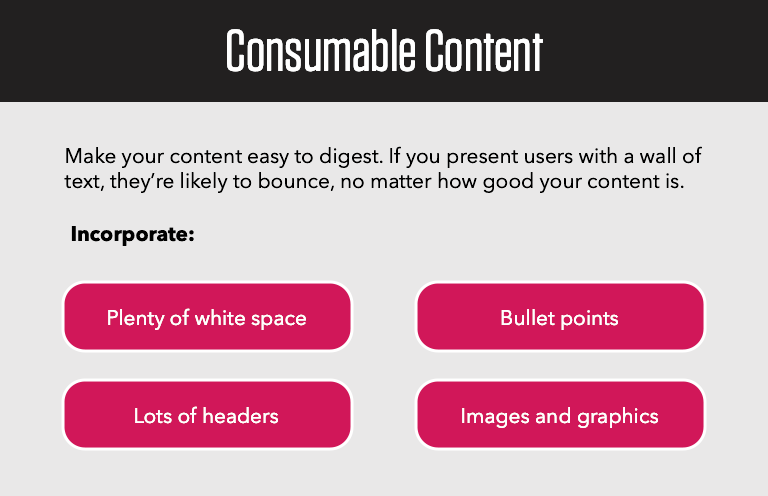
graphic of consumable content

10. Technical SEO and Site Performance Are Table Stakes—and GEO Prerequisites

Technical SEO forms the foundation of everything else. In 2026, a technically sound website is not just a ranking factor—it is a prerequisite for GEO visibility. AI systems preferentially surface content from fast, well-structured, mobile-optimized sites because they are easier to crawl, parse, and cite.

Site Speed and Core Web Vitals

Page speed and site performance remain critical ranking factors. Google shares this sentiment, as they’ve included site speed as a ranking factor (US Patent 8,645,362) and introduced Core Web Vitals in May 2020. Core Web Vitals—Largest Contentful Paint (LCP), Interaction to Next Paint (INP), and Cumulative Layout Shift (CLS)—continue to influence rankings and user experience. Use Google Search Console‘s Core Web Vitals report alongside PageSpeed Insights to diagnose and resolve site performance issues. A slow site wastes every dollar spent on content creation.

Mobile-First Indexing and Mobile Optimization

Google’s Mobile-First Indexing means Google primarily uses the mobile version of your site for ranking and indexing. In 2026, with 60%+ of searches occurring on mobile devices and mobile browsing patterns shifting further toward AI interface use, mobile compatibility is non-negotiable. Ensure your B2B website delivers a flawless experience on mobile, including fast-loading pages, readable typography, and clear conversion paths. AI Overviews push traditional organic links further below the fold on small screens, making mobile optimisation even more critical for maintaining CTR. Learn more about modern website design best practices.

Structured Data and Semantic Markup

Structured data is one of the highest-leverage technical SEO investments for B2B companies in 2026. Implementing Article, Organization, FAQ, HowTo, and Product schema via Schema.org semantic markup does three things: it improves eligibility for rich snippets in Google search results, it helps AI systems understand the entities and relationships on your site, and it increases the likelihood that your content is selected as a citation in AI-generated answers. Entity linking and semantic relationships are foundational to GEO-ready site architecture.

Internal Linking

A well-designed internal linking structure reinforces topic authority architecture, passes link equity between pillar pages and content clusters, and guides both AI crawlers and human readers through your content hub. Internal linking is consistently undervalued in B2B SEO programs despite delivering compounding returns over time. Track key SEO metrics including internal link distribution and crawl coverage in Google Search Console to identify gaps.

11. Content Freshness Matters More Than Ever—Especially for AI Citations

AI answer engines weight recency when selecting sources. A guide published in 2023 with no updates will lose ground to a refreshed 2026 article on the same topic—even if the older article has more backlinks. This creates a new imperative for B2B content teams: a systematic, documented content refresh cadence.

Stratabeat (a B2B content marketing agency) updates its marketing planning post every year, given that it’s an annual and quarterly activity of many businesses. However, for something like our post on sensory adaptation in marketing, we update it only every few years. The key is intentionality—not ad hoc updates when traffic drops.

When auditing existing content, four actions are available:

Content Audit Action When to Use It GEO Benefit
Update Accurate topic, outdated data, statistics, or examples (e.g., 2024 stats now available) Restores AI citation eligibility; signals freshness to AI crawlers and Google
Expand Good content that lacks depth vs. current top performers in the SERP Builds topic authority; increases likelihood of passage rankings and AI citation
Merge / Consolidate Multiple thin posts covering the same topic (content cannibalization) Eliminates cannibalization; concentrates authority architecture on one URL
Redirect / Delete Irrelevant, low-quality, outdated, or duplicate content Improves overall domain quality signal for both search engine algorithms and GEO

12. Link-Building Strategies Are Evolving—Authority Is Earned, Not Built

Traditional link building—acquiring backlinks through outreach, directories, and guest posts—remains a foundational element of B2B SEO strategy. But in 2026, the most effective link-building strategies are increasingly indistinguishable from good content marketing and digital PR. The best backlinks are earned through original research, expert commentary, and content that journalists and industry analysts genuinely want to reference.

For B2B SaaS and tech companies, link-building strategies that consistently deliver in 2026:

  • Original data reports and benchmark studies (like Stratabeat’s annual B2B SaaS SEO Performance Report, which analyzes 300 B2B SaaS websites to identify what actually drives Google organic traffic)
  • Executive thought leadership and byline articles in industry publications
  • Partnerships with complementary SaaS vendors for co-marketing and mutual citation
  • PR-worthy product announcements, customer milestones, and industry firsts
  • Podcast appearances and webinar collaborations that earn host-site citations

Link building and GEO are deeply interconnected. The same brand mentions, citations, and third-party references that build domain authority for traditional SEO are the signals that Large Language Models use to identify authoritative sources for their AI-powered search results. For a deeper dive on capturing more SERP real estate, see how to dominate the Google SERP.

13. B2B Brands Must Think Multi-Channel Across the Entire Digital Landscape

The modern B2B buyer uses an average of five platforms when searching for information. They move between Google, ChatGPT, LinkedIn, YouTube, and community forums like Reddit and Slack groups. Your content strategy needs to meet them across all of these touchpoints in the digital landscape—not just rank on Google.

This is why content repurposing in 2026 is a distribution strategy, not just a production efficiency play. A single original research report can become:

  • A long-form content pillar page targeting head-term keywords and earning passage rankings
  • A LinkedIn article series from your CEO building personal brand authority and topical credibility
  • A video content series for LinkedIn and YouTube (where AI has weaker grip on search results)
  • A webinar that earns high-quality backlinks from registrant and partner promotion
  • An infographic optimized for Google Images and visual search
  • Reddit or Quora contributions in niche B2B communities that AI systems actively crawl
  • A podcast episode or guest appearance that earns a PR citation and domain authority link

Each of these touchpoints creates a signal that LLMs use to understand and trust your brand. The more consistently your brand appears—with authoritative, consistent messaging—across the web’s most-crawled platforms, the stronger your GEO visibility becomes. Voice search and virtual assistants are also increasingly querying these same sources, making a multi-channel presence a long-term investment in discoverability across every AI-powered interface.

B2B SEO

The Advanced Guide to B2B SEO

Forget SEO 101. See how to actually execute an effective SEO program to fuel greater growth. Read the Post

Preparing for the Future of B2B SEO

Are you ready for 2026? Is your B2B SaaS or tech company primed to deal with the flood of AI-generated content, frequent algorithm updates, the acceleration of zero-click searches, and the new discipline of GEO?

The brands that will win aren’t the ones debating whether SEO is dead or whether GEO has replaced it. They’re the ones who have committed to a dual-optimization B2B SEO strategy—building deep topic authority, creating genuinely expert content, investing in technical SEO and site performance optimisation, and showing up wherever their buyers are searching, whether that’s Google, ChatGPT, LinkedIn, or Perplexity.

If you need help building a B2B SEO and GEO strategy that delivers compounding growth, consider working with an experienced B2B SaaS SEO agency like Stratabeat. We have our finger on the pulse of the industry and help you stay ahead of the game with advanced SEO, GEO, content, and web strategies—based on the data, not the hype.

Ready to accelerate your growth?

Stratabeat achieved 7,235.7% organic traffic growth for a B2B client in one of the most competitive categories in Google. See How!
7,235.7% Increase in Organic Traffic

SEO Trend FAQs

B2B SEO strategy must account for longer sales cycles, multiple decision-makers with different buyer personas, and lower but higher-intent search volumes—meaning keyword research and content creation need to speak to an entire buying committee, not a single consumer. B2B companies also generate 2x more revenue from organic search than any other digital channel, making it a uniquely high-ROI investment.

GEO (Generative Engine Optimization) is the practice of optimizing your content and authority signals to be cited by AI platforms like ChatGPT, Perplexity, Google Gemini, and Copilot—tools your B2B buyers are increasingly using during the research phase of long sales cycles before they ever reach your website. GEO is not a replacement for SEO; it’s a parallel discipline that rewards the same foundational investments: original research, topic authority, E-E-A-T, and structured content.

Shift your content mix toward what AI can’t replicate—original research, case studies, proprietary data, and deeply expert long-form content—while tactically focusing on winning featured snippets, dominating PAA slots, and strengthening MOFU and BOFU content where AI vulnerability is lowest. Use Google Analytics and Search Console to identify which content types are holding CTR and double down on those formats.

Technical SEO is the foundation everything else rests on. Without fast page speed, clean site architecture, mobile-first indexing compliance, and semantic markup, even great content will underperform. For GEO specifically, well-structured HTML, FAQ schema, and clear heading hierarchies make it significantly easier for AI crawlers to extract and cite your content.

In 2026, the highest-value keyword research for B2B maps queries to specific buyer personas and sales cycle stages, prioritizing long-tail keywords with high commercial intent that are less likely to be displaced by AI Overviews. Focus especially on queries that require firsthand experience or proprietary knowledge to answer well. Those are the ones where your content can genuinely outperform an AI-generated answer.

Content marketing is the engine of B2B SEO—without substantive, expert-level content there is nothing for search engine algorithms or Large Language Models to index, rank, or cite. The most effective programs in 2026 are built on topic authority, original insight, E-E-A-T signals, and precise search intent alignment, measured not just by organic visitors but by pipeline contribution and customer lifetime value.

Connect organic performance directly to revenue by layering Google Analytics (GA4) and Search Console data with your CRM to track how organic-sourced leads progress to pipeline and closed revenue. For GEO, monitor AI-referred traffic in GA4 as a separate source and track its conversion rate. Use our SEO ROI calculator to quantify the impact—because traffic that doesn’t drive revenue is vanity, not value.

For purely digital B2B SaaS products, local SEO is typically low priority—but ensuring accurate business information across Google Business Profile and key directories matters for brand entity recognition, which feeds into Google’s knowledge graph and is a real (if minor) input to domain authority. For B2B companies with regional sales teams or physical offices, local SEO can contribute meaningfully to brand visibility and trust.

The content formats that perform best for voice search and virtual assistants are the same ones that perform best for GEO: concise, direct answers to specific questions structured with clear FAQ schema and natural language phrasing. Ensure your most common buyer questions are answered in the first 50–100 words of a section—optimizing for the spoken query a buyer would ask their virtual assistant, not just the keyword they’d type on a desktop.v